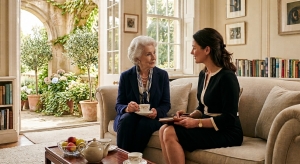
As the UK’s affluent population ages, a distinctive new type of household role is becoming more common. It sits somewhere between a traditional personal assistant and a trusted companion, offering practical lifestyle support and company rather than clinical care. At Marshall Harber, we have seen a steady increase in requests for live-in travelling PA/Companions — particularly for independent, mature principals who remain active but value consistent, discreet support.
Why This Role Is Emerging
Many clients in later life are still fit, socially engaged and intellectually sharp. What they often lack is reliable day-to-day company and organisational support, especially when a spouse travels or family members live at a distance. The result is a demand for someone who can combine administrative competence with genuine interpersonal warmth — a person who can manage diaries, coordinate travel and simply be present in a natural, professional way.
What the Role Typically Involves
A travelling PA/Companion usually provides:
- Day-to-day companionship and lifestyle support
- Assistance with emails, correspondence and light administration
- Coordination of appointments and diary management
- Organisation of transport and travel logistics
- Accompanying the principal on journeys and at social engagements
- Flexible, responsive support across multiple locations
In many cases the role involves regular travel between homes or international destinations and requires a current driving licence. Working hours are often in the region of 50 hours per week with the flexibility that private households demand.
The Ideal Candidate Profile
Success in this position depends less on formal qualifications and more on personal qualities. Clients typically look for someone who is:
- Personable and emotionally intelligent
- Highly organised and reliable
- Naturally discreet and professional
- Comfortable building a long-term, trusted relationship
- Adaptable to changing locations and routines
The ability to offer both practical assistance and easy companionship is essential. This is not a care role; it is a lifestyle support position for someone who remains independent but values consistent, high-calibre company.
Benefits for Discerning Households
For principals and their families, a well-matched travelling companion provides continuity, reduces logistical friction and offers peace of mind. It allows the principal to maintain an active social and travel life while ensuring that day-to-day organisation is handled smoothly and privately. When the right person is found, the arrangement often becomes a long-term professional relationship rather than a short-term placement.
Finding the Right Fit
Because the role combines administrative skill with interpersonal sensitivity, careful matching is critical. Specialist agencies such as Marshall Harber are well placed to identify candidates who understand the nuances of private household work and can operate with the required level of discretion and flexibility. Thorough assessment and vetting remains the most reliable way to evaluate both practical competence and personal suitability.
As demand for this type of support continues to grow, households that invest in the right travelling companion often find it transforms daily life for the better. If you are considering this kind of role — either as a principal or as a candidate — we would be happy to discuss the opportunities currently available.

For high net worth families, having an experienced and reliable personal assistant can be invaluable. From managing their daily activities to providing support for family members, personal assistants play an important role in helping their employers live a comfortable lifestyle. Here’s a look at the responsibilities of private family personal assistants.
Organizational Responsibilities
One of the primary duties of a private family personal assistant is to organize their employer’s day-to-day life. This includes managing calendars, scheduling appointments, making travel arrangements, and coordinating with other staff members. Assistants may also be responsible for filing paperwork, taking notes during meetings, and performing administrative tasks like data entry or document preparation. Any tasks that need to be completed on a regular basis should fall under the scope of this position.
Family Support
In addition to administrative duties, private family personal assistants are often tasked with providing support directly to family members. They may help monitor children’s educational progress or coordinate extracurricular activities for them. They may also run errands or take care of any other needs that arise within the household. It is important for these assistants to have excellent organizational skills as well as strong interpersonal communication abilities in order to effectively handle these kinds of tasks.
Other Duties
The exact duties of a private family’s personal assistant will vary depending on the specific needs of their employer’s household. In some cases they may be asked to manage household finances or oversee repairs and maintenance jobs around the home. They may also be responsible for handling vendors or contractors who work with the family on special projects or repairs as needed. In short, no two days are ever quite the same when it comes to being a personal assistant in a high net worth household!
A private family's personal assistant plays an important role in helping their employers maintain an orderly lifestyle while providing direct support to each member of the family when necessary. Responsibilities range from organizing daily activities and making travel arrangements to monitoring children's educational progress and handling vendors and contractors for home repairs or special projects. No matter what type of task is required, it is essential for private family personal assistants to have excellent organizational skills as well as strong interpersonal communication abilities in order to successfully carry out their duties on behalf of their employer's household.